2025 · Product & Designer · 1–3 months
Fluency Corporate - Building a corporate learning platform from 0 → 1, in 3 months

tl;dr
- In April 2024, Fluency Academy acquired Awari (YC W21) to expand its value chain beyond language learning into corporate career development;
- I was the sole designer on the team tasked with translating Fluency's language-teaching methodology into a B2B product;
- We launched a 4-interface platform in three months with Hotmart as our first beta client;
- R$400k+ in MRR, serves high-scale clients, and offers 20+ courses across languages, soft skills, and hard skills.
Shoot-out to the team that also worked in the project: Fabio Muniz, Yuri Silveira, Maicon Furtado, Paula Costa, Leticia Ivanike, Ana Vazquez.
The Problem
Corporate learning platforms that existed before Fluency Corporate carried real friction for employees: legacy methodologies, unintuitive interfaces, and cohorts mixed with strangers from other companies. Fluency Corporate's core bet was structural: build cohorts exclusively from a single company's own employees, creating a tighter, more relevant learning experience by design.
The business case was equally clear. As part of Fluency Academy's post-acquisition growth strategy, we needed a distribution vertical that let companies develop and track their employees' progress, turning language learning into a broader corporate development platform.
My Role
I was the only designer on the project, reporting directly to the VP of Product, working alongside 2 full-stack developers. I owned product and design decisions end-to-end, not just interface work, but what got built and why.
In exchange for that ownership, I got direct visibility into company strategy, which kept my decisions aligned with where the business was heading. I also drove sprints, built roadmaps, and reported progress to stakeholders.
The 3-month timeline to launch beta cohorts wasn't something we negotiated. It came down from leadership as a quarterly OKR. That constraint shaped nearly every decision below.
The Approach
1. Reused Awari's live-class architecture: Awari's tech team already had a proven system for live classes, so reusing that architecture was the fastest path to a working beta.
2. Brought pedagogy and operations into product decisions from day one: looping the pedagogical and ops teams directly into product and design discussions meant flow decisions and requirements were grounded in how the learning actually worked, not just how it looked.
3. Validated with Hotmart as a live beta client: Hotmart came in as our first real client during the build. We ran weekly ceremonies and demos with their team throughout development, using their employees' actual usage to surface pain points, missing flows, and requirement gaps across all four interfaces before wider rollout.
Solution & Results
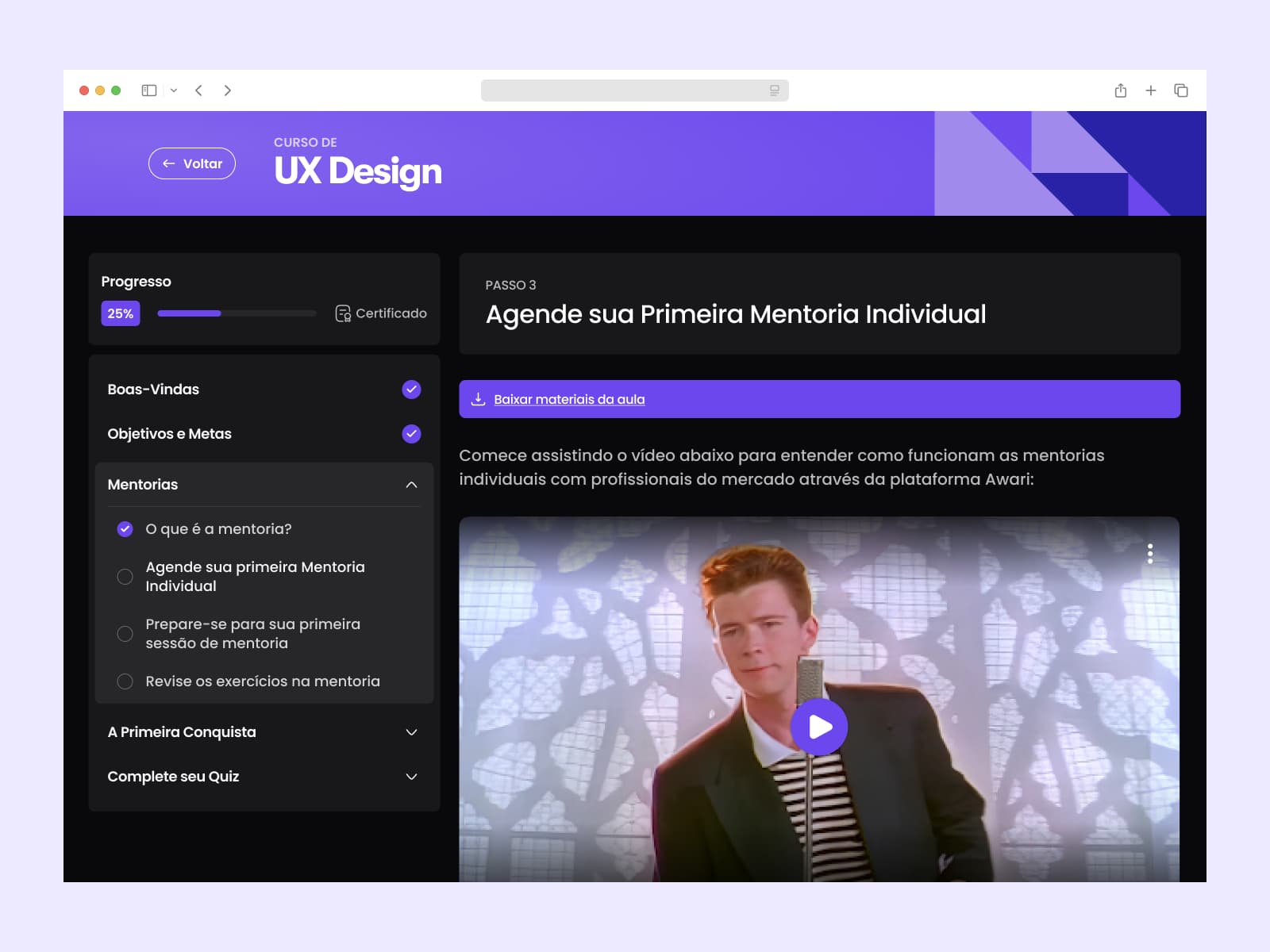
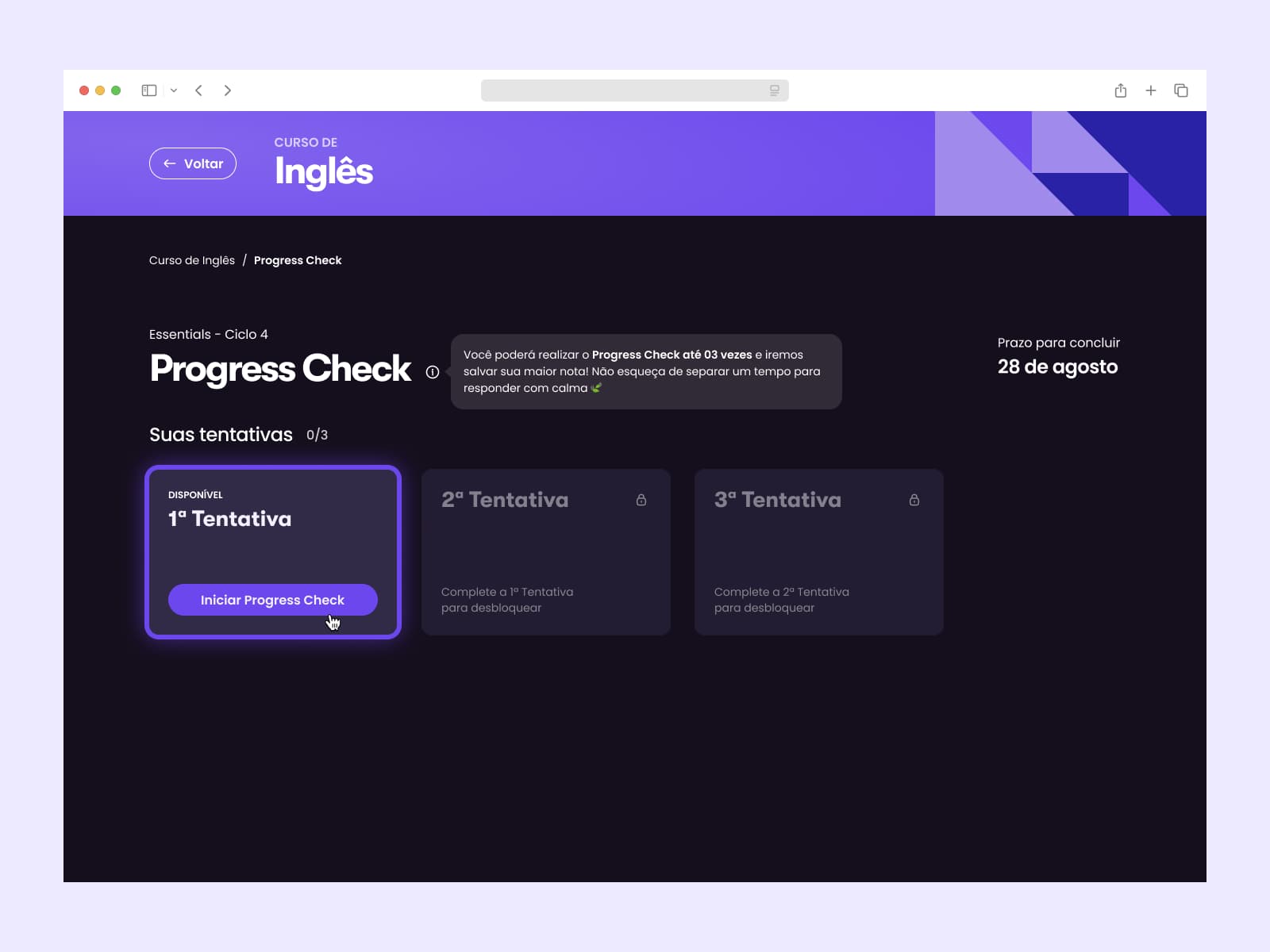
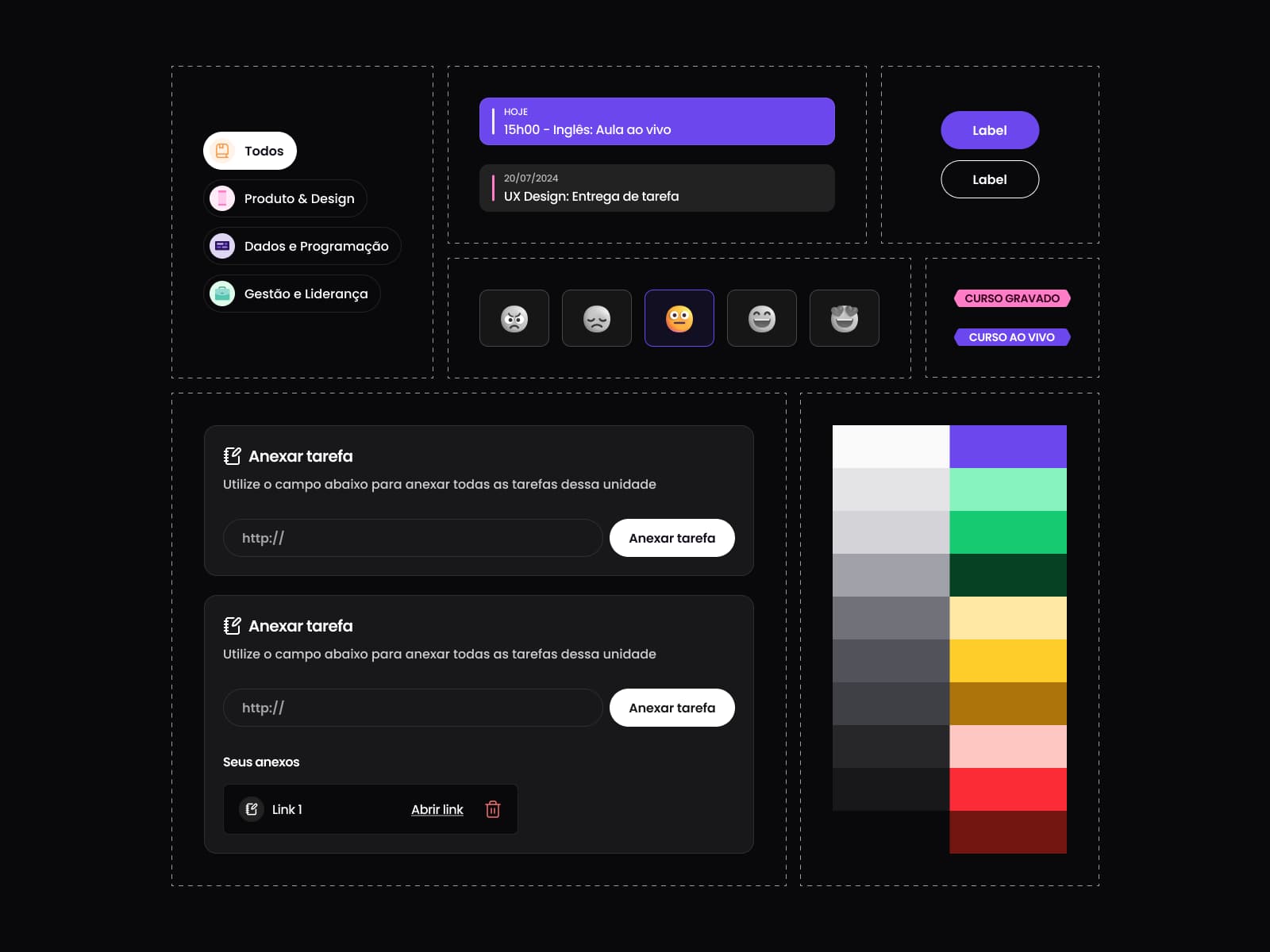
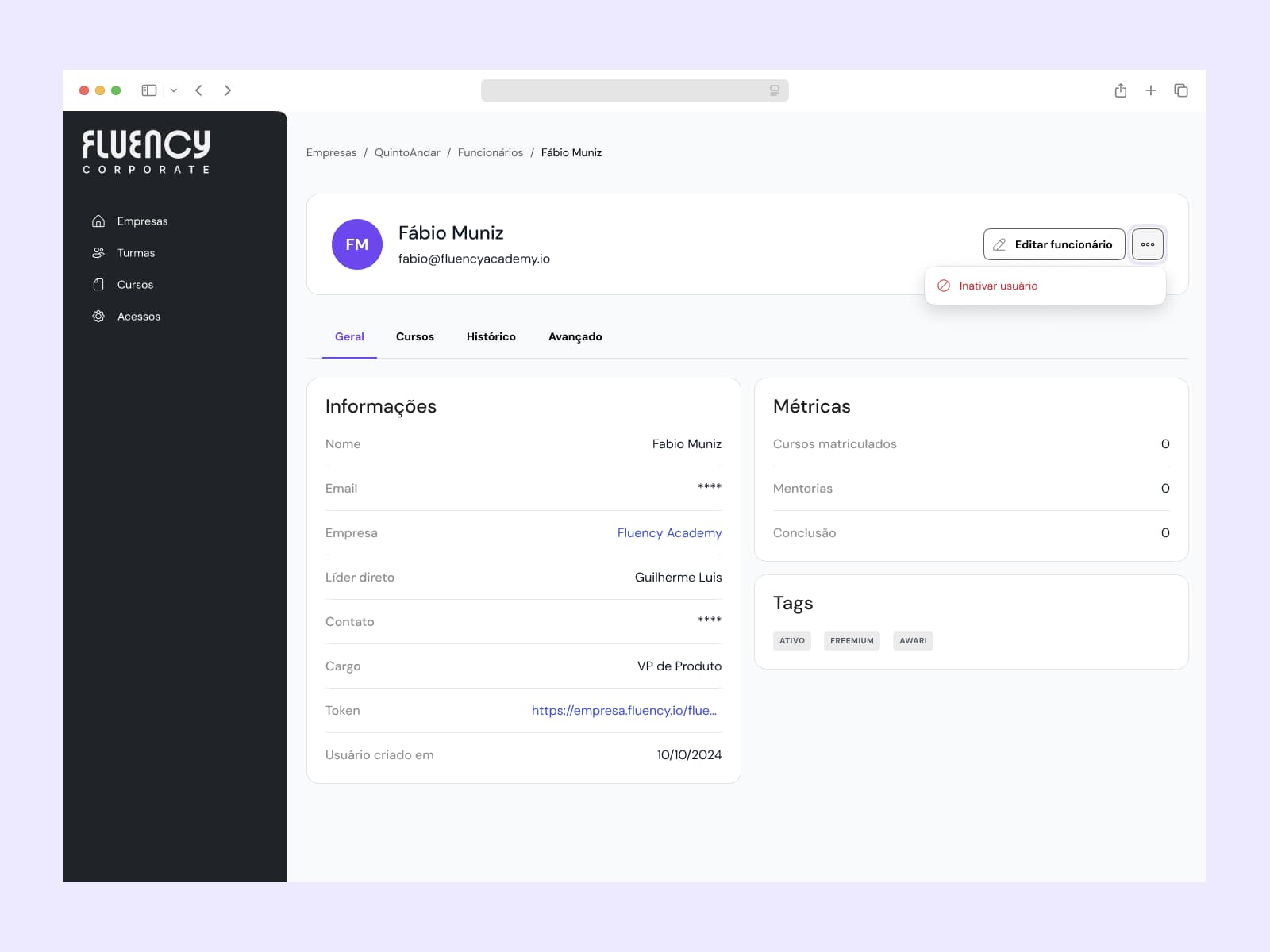
We shipped four distinct interfaces, each built for a different stakeholder in the corporate learning loop:
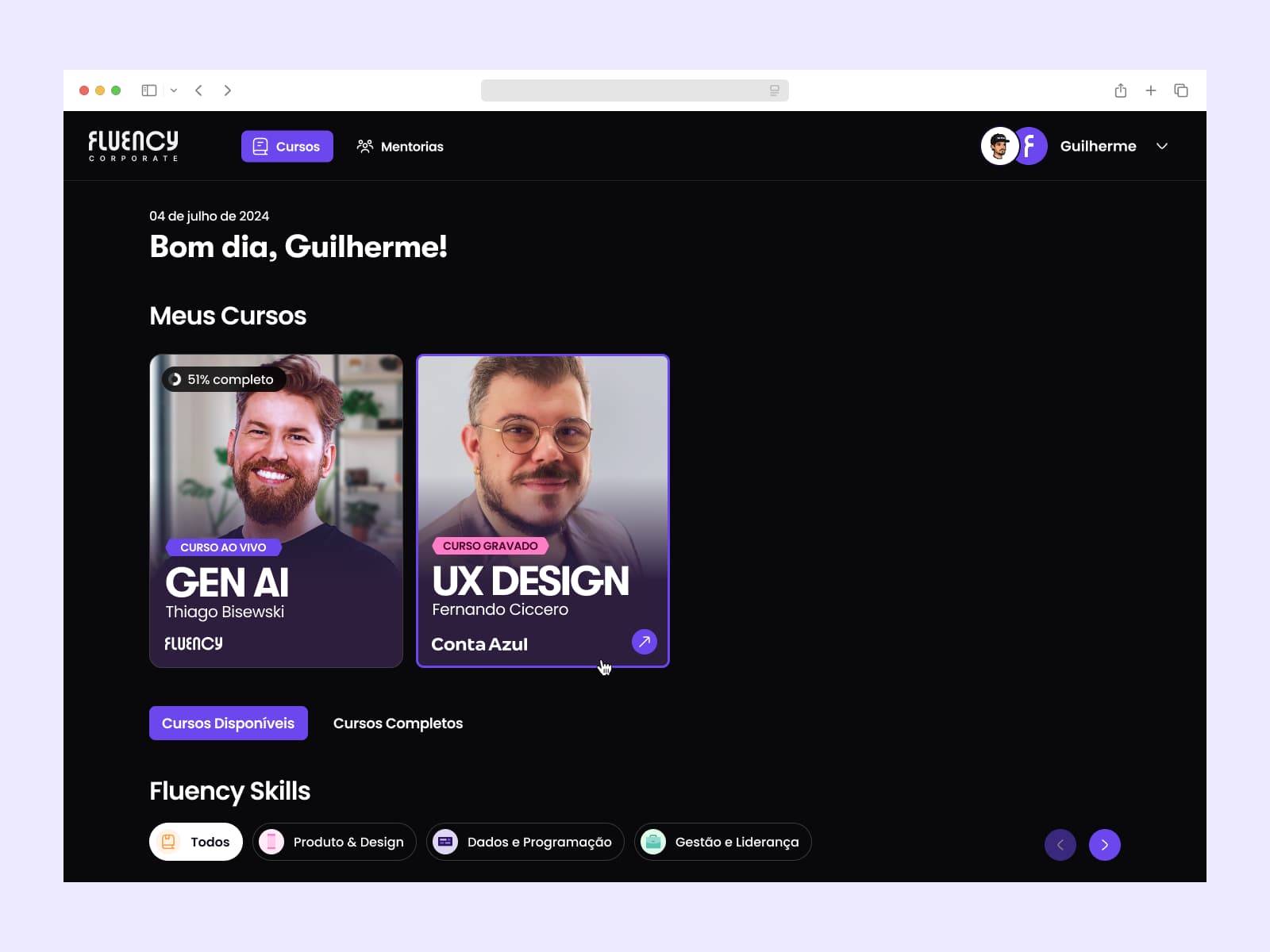
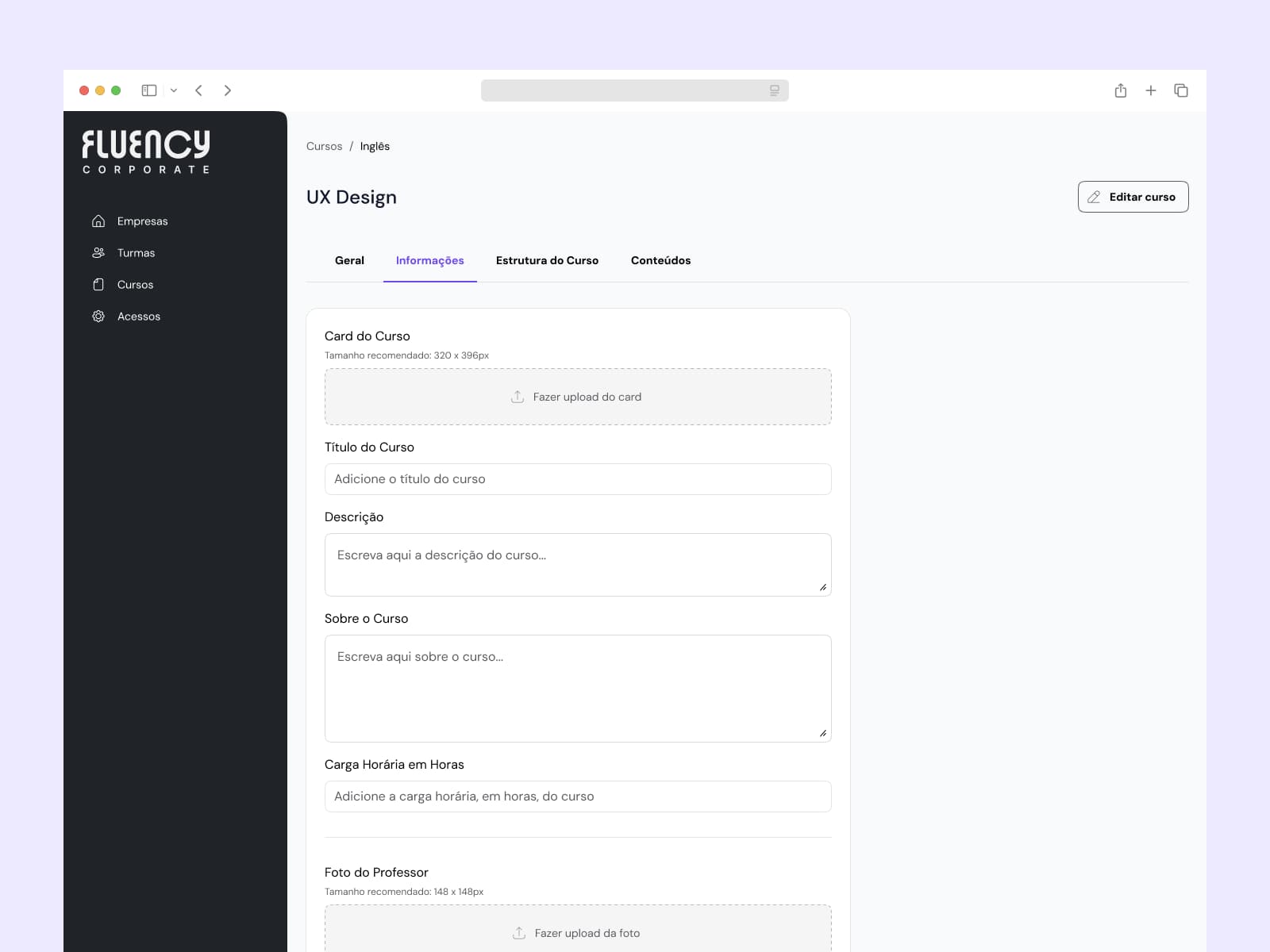
- Internal backoffice — for the Fluency team to manage clients, cohorts, and content across the whole platform;
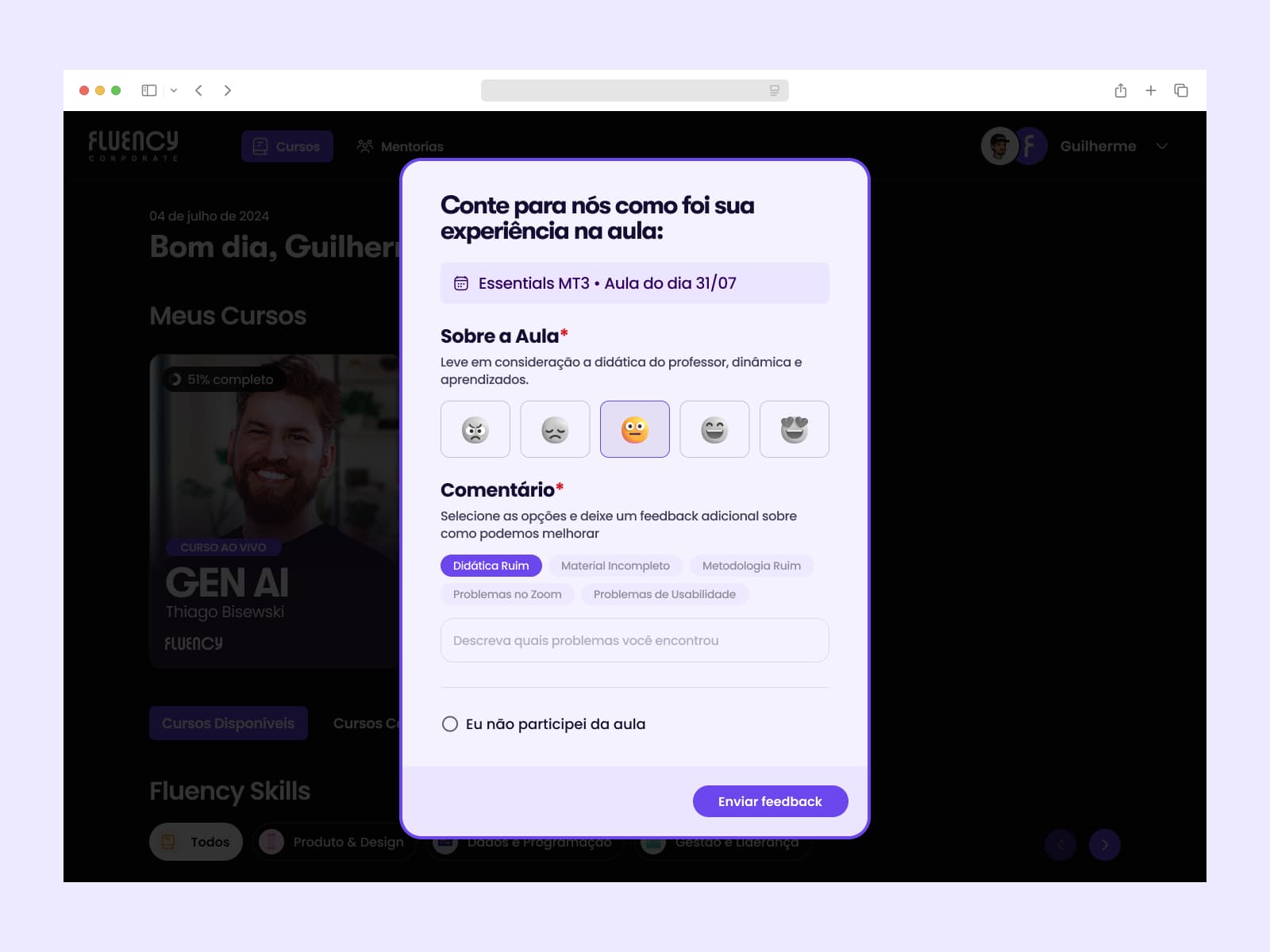
- Student LMS — where employees access their courses, live classes, and progress;
- HR Dashboard — where company managers track and manage their employees' progress individually;
- Teacher Dashboard — where instructors manage cohorts, log student notes, and release progress checkpoints.
Few months after launch, product reaches an expressive growth and scale:
- R$400k+ MRR within months of launch;
- 20+ courses spanning languages, soft skills, and hard skills;
- High-scale clients including Hotmart, Webmotors, and Rentcars;
- Strategic partnership with Saber Ampliado, bringing in recognized instructors such as Leandro Karnal, Mario Sergio Cortella, and Clóvis de Barros;
- Following a company reorganization, the platform was folded into Fluency's Web team, which now owns it alongside the company's other web products.
Learnings
- Shipping fast forced us to test the entire architecture, integrations, and feature set with real cohorts, which surfaced problems, like the calendar sync issues, that only show up under real usage.
- That speed came at a cost: as the platform scaled, some of the technical debt from reusing Awari's architecture became a real bottleneck for whitelabel and custom client experiences later on.
- What I'm most proud of isn't a specific screen, it's having balanced design execution with product strategy: not just deciding what the interfaces looked like, but defending why things needed to work that way to directors and stakeholders.
More case studies